Works with individual teens, adults, families, and couples. Utilizes a psychodynamic approach integrating Cognitive Behavioral Thearpy (CBT) and Emotion Focused Therapy (EFT) to help clients navigate issues related to neurodiversity, anxiety, BIPOC specific related struggles, and relational problems. Anna is also trained in Brainspotting to help clients navigate and heal from PTSD and complex trauma.
Our Longmont, Broomfield, Online Team
Anna Dwyer, LPCC
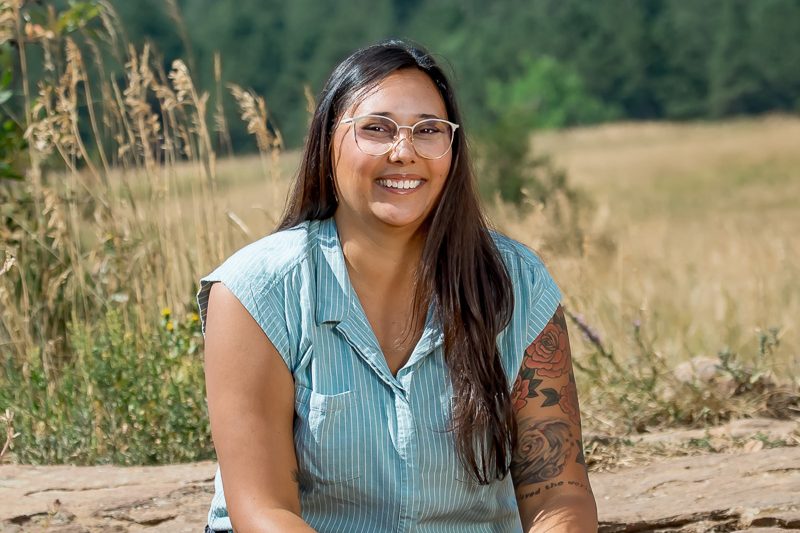
About Anna
After personally experiencing the healing that can come from working with qualified therapists, I found that I am passionate about helping others to find that same wholeness and healing. I believe that every person is unique and requires specialized treatment in order to achieve their own therapeutic goals. Coming from a psychodynamic lens, together we will look for patterns in thoughts, behaviors, and beliefs to give you greater insight into what led you to become the person you are today. We will incorporate your personal goals and, using research based practices like CBT and EFT, move you towards health and healing so that you are able to become the person you’d like to be.
In my free time I enjoy spending time with friends, eating good food, and taking walks with my husband and our dog (Tamale), and generally lazing about – preferably on a paddleboard in the summer, but my couch with a good book will do just fine in the winter months.
Fun Facts about Anna
Fun facts:
– Dreams of owning a highland cow one day
– Born and raised Michigander, eh?
– Summer girlie
– ADHD craft hoarder
I have ALWAYS loved Highland cows. The first (and only) time I got to see/pet/squeal at one in person, my soul lit up. That thing was objectively disgusting, hair matted, walking around in it’s own dung, flies all over it’s face. But I swear to you, I’d never spent time with anything more beautiful. When I told my best friend about this she genuinely recoiled (because obviously outside animals are not for fraternizing with). And you better believe when she talks about sitting down to play ANOTHER complicated board game, I have a similar reaction. The point is, each of us has things that fill our cup. Maybe nobody else in your life shares your interests or hobbies, but the reality is that these little “non-essentials” end up fueling us through the slough of life. When things get really heavy, they can provide a particular reprieve that just willing yourself into mental health cannot. If your therapy homework doesn’t include something that is life giving and honestly just plain fun… Well, you might still grow as a person, but it’s going to take longer and be a lot more odious. We need our outlets and our mental health work goes quicker and better when it’s incorporated into our treatment.
Anna’s Areas
Neurodiversity, anxiety, depression, BIPOC specific struggles, and relational pro
Works with individual adults, families, and couples
CBT (Cognitive Behavioral Therapy) and EFT (Emotion Focused Therapy)
Anna Dwyer, LPCC
Frequently Asked Questions in Therapy to Anna
Girl, it’s tough out here! For me, this feels very eldest daughter/ADHD coded. Always expected to know what to do even though nobody ever taught you, and your brain and body are disagreeing about doing it even if you did know what to do. Especially for someone who had undiagnosed ADHD, I felt a lot of shame about being “lazy” and I couldn’t understand how other people could just *do* stuff. When I finally got diagnosed and learned, through my own therapy, how to lean into the positives that ADHD comes with (which they never tell you about btw), the more it started to feel like a superpower rather than kryptonite. Your neuro-spicy brain isn’t something “wrong” with you. This world we’re in isn’t set up for it to thrive, but with self compassion, guidance, and a LOT of practice you just might learn to love being different.
We learn pretty young that it’s only good to stand out when you’re excelling at something. Win a trophy in a sport? Great job! Want to talk too much about your niche interest? Yikes, better quiet down. We learn before we even have language for it that if we don’t stick out, we’ll be okay. Accepted. Maybe even loved! But if we don’t follow social norms, nobody will understand us or want to spend time trying. So we put on a “normal person” mask. The problem is, masking consistently takes a toll on not only your emotional health, but your nervous system! Wouldn’t it be great to be able to walk into a group of people, not knowing what they will think of you, and feel confident? To learn how to love yourself well enough that you can easily spot others who you’ll fit well with? You don’t have to struggle to get to that point alone and you’re definitely not the only person we’re working with who feels like this. Come hang out and learn how to be accepted for who you actually are, and how to accept yourself while you’re at it.
Five years into my marriage, I thought (almost daily) that “if I wasn’t so committed to not getting divorced, I’d have already filed.” I knew I was committed. I knew my value was to find a way through rather than calling it quits. I just didn’t know how to actually *do* that. It felt hopeless. I couldn’t see a way through that would be any better than calling it quits. Through couples counseling, I was given a third vantage point from which to see our pain and struggles. Any good couples counselor will tell you they are on nobody’s “side” except for the side of the relationship. This unbiased third party’s view point helped me to develop compassion where there had been contempt even while understanding, reconciliation, and growth were far off. If any of this resonates, know that you’re not alone. If you love your partner and genuinely want to try, but don’t see a way forward, know that there is hope. Through couple’s counseling your therapist will work together to do what’s best for your relationship, what aligns with your values, goals, and beliefs.
I recently learned the term “no sabo.” This describe a Latino American who doesn’t speak Spanish, and GIRL, the way I felt known and seen. As the only person in my family who cares about my ethnic and cultural background, I never felt quite right in a family of brown folks who may as well have won a gold star in assimilating. I grew up feeling pretty white, but found myself with regular comments about my skin color and where I was from (Detroit, by the way). It felt like there wasn’t a place where I truly fit. Regardless of your cultural or ethnic background, there are bound to be places where you don’t feel known or accepted – from your peers, to your community, and even within your own family. Understanding your identity has EVERYTHING to do with mental health care. When you’ve spent your life feeling like you’re walking a line between two different groups, you know how exhausting it is. Come learn how to embrace all of your identity and how to navigate the world in your own skin.
We all know what we need to do *in theory.* And to some extent, we all choose not to do it. For some that’s conscious and for some of us it’s not. Either way, there’s no escaping the fact that our wills don’t always line up with our actions. As the Queen (Taylor Swift) once said, “old habits die screaming.” From before we ever utter our first word, our brain begins forming patterns. It looks for how life works and tries to follow a reliable path. The problem is, life is full of broken people. Nobody acts in exactly the right way towards everyone all the time. So your brain also learns protective measures. Often these protective measures serve you REALLY well in your adolescence, but when adulthood comes around… Suddenly these things that helped us survive emotionally are causing us trouble. Together we can explore where and how you learned to navigate life and do a Marie Kondo-ing of your mental world. What do we want to keep, what do we want to get rid of, and what do we want to change? Only this time, nobody is influencing your decisions but you.
See above AND… When those protective measures come from trauma (small traumas over a long time, big traumas in a single incident, or a combination of the two), the brain REALLY wants to nail those down. To NEVER let that happen again. You’re at meet or school or talking to your partner and someone speaks to you in a very monotone voice, conveying the bare minimum information. All of a sudden, I am positive that I’ve done something to upset them and they hate me and I have to scramble to either make it right or cut them off entirely because they’re obviously a lost cause. Imagine uncovering the truth about the situation and realizing they just needed a cup of coffee and were dragging after having trouble falling asleep the night before. Your nervous system wants to protect you and it does a DAMN good job of it… Usually. Let’s work together to figure out how and when those patterns are helpful, and create new ones when they’re not.
Me: Heyyyyyy!!! Can’t wait to hang out tomorrow. Let me know what time to meet you 🙂
Them: 6:30 at the restaurant
**Me (internally): THEY HATE ME AND I HAVE SOMEHOW OFFENDED THEM OMG I AM THE WORST POSSIBLE PERSON THAT HAS EVER EXISTED AND I DON’T DESERVE TO BE FRIENDS WITH ANYONE GOOD I CAN NEVER BE LOVED BECAUSE I’M WAY TOO MUCH AND I’M JUST A BURDEN AND, AND, AND…**
Them: Sorry, was in a meeting – yes, I’m excited too! I have so much tea for you since the last time we hung out! See you there!!
________________________________________________________________________________
Girl, BEEN THERE! Social and relational anxiety is no joke. Do you find yourself constantly overanalyzing even the most inconsequential interaction, looking for ways you may have messed up? Or maybe you don’t ever make it that far – you find yourself going over possible interactions that never end up happening so that *if* they do, you’ll be ready with the right thing to say or do. We are wired for connection. It makes sense that you want to ensure that your relationships are positive and healthy. But the result of living in a broken world with broken people is that nobody does this perfectly. Some of us struggle more than others. Learning to calm your nervous system so that you can see and understand relationships from a healthy perspective can make a huge difference in the way you live your life. From friendships, to co-workers, to partners, to teammates – we ALL need help learning to relate in healthy ways.
Your brain is INCREDIBLE. AI WISHES it could process the amount of information your brain processes. It fights to keep you alive (both physically and mentally), running in the background of your life. But what about when that incredible machine between your ears keeps ruminating on thoughts or beliefs that you KNOW are making you unhappy? Most often, they creep up in the background like a pot of water boiling slowly, and we don’t even notice them until they’re too deep for us to dig out on our own. Have you ever noticed that with thoughts like these, once you say them out loud you find yourself responding with something like, “I know how that sounds,” or “And I get that it sounds crazy, but…”? You’re not crazy! Your brain is braining and it needs a gentle (or maybe an MMA sized) nudge to process your thoughts in a healthy way. Let’s bring the things that are running in the background up to the surface so we can decide what needs to be changed and work together to make that happen for you.