Works with adults and specializes in Cognitive Behavioral Therapy and Dialectical Behavioral Therapy.
Our Longmont, Broomfield, Denver, Online Team
Katie Helm, LCSW
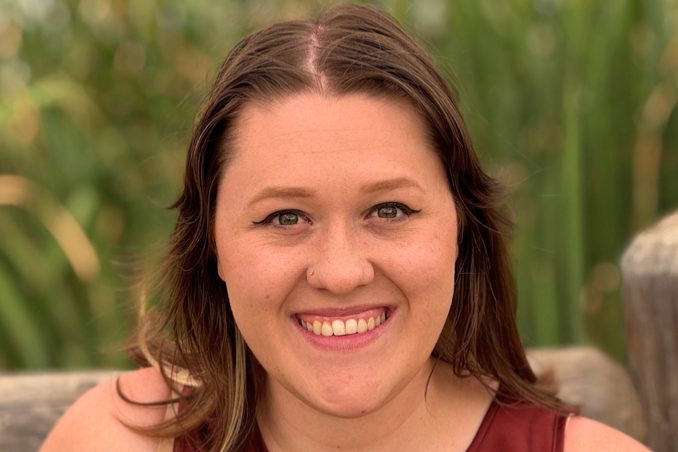
About Katie
Do you have a hard time looking at yourself in the mirror? Do you feel disconnected from your true self? Have you lost yourself by putting others before yourself?
I believe therapy is a space where you can slow down, explore your experiences, and build a stronger connection with yourself. I work with individuals of all ages and backgrounds, helping them to navigate the challenges of daily life, process emotions, and discover healthier ways to cope. I offer both telehealth and in-person sessions with immediate openings. My approach combines Cognitive Behavior Therapy (CBT), Dialectical Behavior Therapy (DBT), and Motivational Interviewing (MI).
These are tools that can support you in understanding patterns, building skills, and making meaningful changes at your own pace. Whether you are managing stress, working through difficult emotions, or seeking more balance, my goal is to create a supportive, collaborative environment where you feel heard and empowered.
You don’t have to go through this alone. Therapy is a place where growth and healing happen. I would be honored to walk alongside you on that journey.
Fun Facts about Katie
- I am a beekeeper of 6 years who has successfully bred queens.
- I have extensive experience driving a snowplow, mowing, and road work.
- I love to cross-stitch, crochet, and do other artistic things, such as diamond painting.
- I am a salsa connoisseur.
- Working with the bees has been such a wonderful hobby to get into. I have learned so many fun facts and learned more about myself. I remember that I got stung very badly almost two years ago on my face. My face swelled up like a balloon and did not go down for a couple of days. When you get stung by a bee and it swells, you know you have a strong hive. I was told by the nurses I worked with that I likely had an allergy. I still work with the bees to this day. I feel that this applies to my approach with therapy; I will continue to work with you through the good and the bad. Honey bees only make 1/12th of a teaspoon of honey in their lifetime. I believe that this mirrors therapy. We may make 1/12 of progress in each session; however, by the end of our process together, we will end up with something hard-earned and sweet.
- Oftentimes, people run away from bees screaming because of fear. I did feel that way for a long time growing up. Now that I work with bees, I know that I just need to stay still. Like in therapy, sometimes we need to pause and be in the moment. The discomfort will pass. Plus, if a bee comes up to you, it means you had something to offer, which I think is beautiful and what a compliment!
Katie’s Areas
- Addiction
- Anxiety
- Depression
- LGBTQIA+
- Grief and Loss
- First Responders
- Trauma
- LGBTQIA+
- Inner Child Work
- Medical Trauma
- Attachment Styles
- Cognitive-Behavioral Therapy (CBT)
- Dialectical Behavior Therapy (DBT)
- Motivational Interviewing
Katie’s Blog Posts

Frequently Asked Questions to Katie in Therapy
- There are a few ways to see if you have lost yourself. Indicators may include being unsure of who you are outside of other people. You may struggle to answer the question “ What do you do for fun?” You may also only feel gratification when you help others and feel uncomfortable when you do things for yourself. Finally, you have a hard time identifying what your emotions are about in situations.
- Meeting everyone else’s needs and ignoring your own can significantly impact your mental, social, and physical health. Here are some signs that you are spending more time meeting others’ needs than your own.
- When someone asks you to do something, your instant reaction is “ugh.”
- You ignore your own needs until you can’t anymore.
- You feel guilty when you do anything for yourself. You think it is selfish.
- It is easy to blame yourself for everything, even when what went wrong wasn’t in your control.
- You have a hard time sharing your feelings or problems with others because you feel like you are a “burden.”
- You feel emotionally and physically exhausted after being around others.
- There is comfort in what we know. Breaking patterns takes work. It is easier to stay the same rather than change. When we do want to make changes, sometimes when we’re in relationships that are “healthy,” we feel unsafe.
- How we are shown love and care growing up can greatly impact relationships with ourselves and others throughout our lives. We learn that we are loved by our primary caretakers. If our primary caretakers struggled to show love or vulnerability, or only showed uncomfortable emotions, we may have internalized those messages. The messages could be “it is not okay to be vulnerable,” “I am only allowed to express a certain emotion,” or “I am unlovable.” Most parents do the best they can, and we also have events and experiences to heal from as adults. It is helpful to address relationship patterns you have experienced or witnessed growing up. It can also help to discuss boundary styles, love languages, and attachment styles.
- The biggest misunderstanding about substance use disorder is that it is a moral failing. Basically, “substance use disorder is a choice.” This is black-and-white thinking. In reality, there are many shades of gray. Substance use disorder is a brain disease. I was told by a very smart co-worker in my years of working in substance use disorder that it is like the development of a road. Using or drinking sometimes is like a dirt road. It’s not developed well. If you have a genetic predisposition, trauma, mental health symptoms, and difficulty coping, this can increase the likelihood of substance use disorder. Let’s say these are true; the drinking or using increases throughout the week. If a person starts to regularly drink or use, this may develop our metaphor of a road into a one-lane highway. The longer that drinking and using occurs and the more an individual relies on it, the brain starts to develop a superhighway. This is why it is so hard to stop, because substance use disorder pathways become incredibly strong. This is also why relapse is common: it’s much easier to get on a developed road than a dirt one.
- Trauma can show up in many different ways. It can show up as low motivation, increased distraction, and sometimes it can show up as ADHD symptoms. Trauma can look like distancing yourself from others. It can look like not knowing yourself or a change in your values. Depending on your upbringing and scale of resilience factors, trauma can present differently. Sometimes it takes time for trauma symptoms to show themselves. Just like grief, trauma can show up at any moment and takes time to grow around. Most, if not all, people experience traumatic events throughout their lives. Our culture expects us to keep showing up for our families, communities, and employers after difficult events. This can be good, but we also need to make sure we aren’t suppressing emotions. When we suppress the “bad” emotions, we are also likely to suppress the “good” ones as well.
- First responders experience a significant emotional toll through the work that they do. They witness everyone’s worst days every day that they work. Then the standard in first responder work is not to talk about it. You are expected to just go back to work after seeing the most incomprehensible events. This is the most harmful part of the job because it teaches first responders that they aren’t allowed to acknowledge their emotions. This leads to substance use disorder, mental health symptoms, sleep disturbances, issues with relationships, etc.
- The industry standard for first responders is not to talk about it. Suck it up. Maybe share dark jokes about it with your coworkers, but that’s it. When we do this over and over again, we become disconnected from others, from our work, and from ourselves. You can talk about hard things. You have seen the worst things possible, so I know that first responders are absolutely brave enough to talk about what you have been through. Therapy will not always be about processing these difficult events every time. We will meet you where you are at. You can talk about hard things because you have done hard things. Plus, some of us therapists have a dark sense of humor, and we are happy to share that with you.
- Grief is not simply something we “get over.” Grief is a lifelong process that will show up at moments that make sense and moments that do not. Grief can show up in unexpected ways. This could look like having an “off day” and not being able to put your finger on why. Or a time of night you used to regularly call a loved one is when you notice an increase in uncomfortable emotions. Stages of grief are not linear. Actually, stages of grief were created as a framework for experiencing terminal illnesses. This framework has moved into all areas of grief. Thank you, Kübler-Ross. Grief is a lifelong process, and we each have unique ways of managing it. I had a professor in college describe grief as a set of train cars. You never get off the track, and every time a loss or change happens, this adds a train car to the track. This is also why you may think about past loss or change when you experience a newer loss.
- Grief also does not always look like the loss of a loved one. Grief can impact all areas of our lives. Some examples are grief over bodily changes, loss of a pet, loss of identity, and grief related to change (even positive ones). Grief is everywhere, but it often goes unacknowledged. It is important to acknowledge and allow grief. If we do not, it is like shaking a pop bottle. Eventually, it will explode.
- The LGBTQIA+ community and identities have so many misunderstandings and judgments. A lot of people judge because of fear and, honestly, because they don’t spend time in the community. The most important work, I think, is getting uncomfortable. Read books by authors who don’t share your identity. Speak with people who are different from you and explore what surprised you.
- People in marginalized communities experience so much hardship due to so many aspects of systems that are oppressive. It is important to consider a person’s environment first. People who identify as LGBTQIA+ face many barriers. They are often not accepted by their loved ones and experience high rates of homelessness, high rates of sexual assault, and various other forms of abuse. These experiences can significantly affect mental, physical, social, financial, and occupational wellness. According to the National Alliance on Mental Illness, individuals who do not identify as heterosexual (gay, lesbian, bisexual, queer, asexual, aromantic, pansexual, etc.) “are more than twice as likely as heterosexual adults to experience a mental health condition.” Individuals who do not identify as cisgender, meaning their gender aligns with their sex assigned at birth (transgender, non-binary, two-spirit, intersex, queer), “are nearly four times as likely as cisgender individuals (people whose gender identity corresponds with their birth sex) to experience a mental health condition.” (NAMI, 2026)
- Some people may experience difficulty with resting. I am one of those folks as well. In therapy, I like to explore how we are raised in relation to expectations of productivity. Productivity can be modeled in healthy or unhealthy ways. Some questions I like to ask are: What makes you believe you don’t deserve rest? Do you get frustrated when others rest? What would happen if you did slow down? Do you feel like nothing would get done?
- You are inherently valuable regardless of your productivity. It may feel good to do everything for everyone and to be hyperproductive. However, do you feel that people actually know you? Putting others first may make you feel close to friends and family. However, this is only one side of a relationship. We keep others at a distance when we don’t allow ourselves to rest or constantly put others first. I often say that porous boundaries (people-pleasing, putting others first) are similar to rigid boundaries (never telling anyone anything about yourself, never asking for help). Both can keep people at a distance. It can be difficult to rest, and it can be difficult to take a step back from others. It is a gift to allow others to take care of you and themselves.
Change is a constant in our lives. We change in every moment. Our cells change, atoms shift; change is everywhere. If you don’t recognize the person you are, and you have gone through changes, that can be good. It is okay not to recognize ourselves. It is okay to sit in the discomfort and experience changes within ourselves. If you feel completely distant from yourself, it is okay to step back and reconnect with yourself. I believe a good place to start reconnecting with yourself is to revisit your values and strengths. Many resources can help you start this process, and therapy can also help you explore these further.